How to Develop a Prop Firm Trading Strategy to Pass Funded Challenges
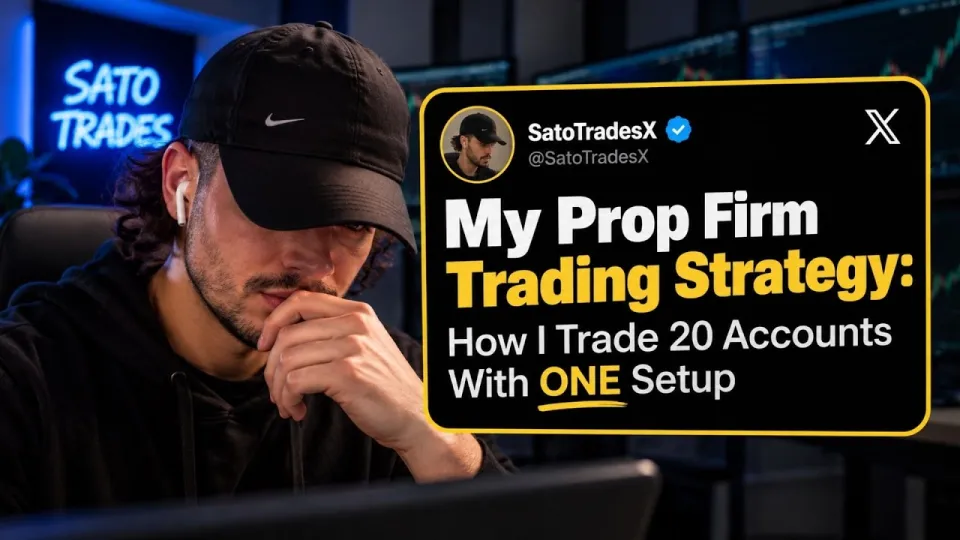
· based on the channel Sato Trades
Passing a prop firm trading challenge requires a precise, mechanical trading strategy combined with disciplined risk management and an understanding of market structure. A successful prop firm trading strategy focuses on futures trading, particularly using the 1-minute chart to identify optimal entry points, and strictly manages risk to protect the funded account while aiming for consistent payouts. Traders can improve their chances by following a structured approach to mark key levels, execute trades with confluence, and scale their accounts effectively.
Understanding the Prop Firm Trading Strategy
A prop firm trading strategy is a systematic approach designed to meet the evaluation criteria of proprietary trading firms. These firms provide capital to traders who pass a funded challenge, which usually involves hitting profit targets without exceeding maximum drawdowns. The core of this strategy is a mechanical trading system that eliminates emotional decisions by defining clear rules for entries, exits, and risk.
Key elements include:
- Using the 1-minute chart for precise timing of entries and exits.
- Trading primarily futures contracts like ES (E-mini S&P 500) and NQ (E-mini Nasdaq).
- Identifying significant daily, high timeframe, and intraday levels to create confluence for trades.
- Setting limit orders with fixed stop loss and take profit levels to automate risk management.
Marking Key Levels and Using TradingView Tools
Identifying and marking key levels on charts is essential. These include:
- Daily ES & NQ order flow levels that indicate potential areas for long and short trades.
- High timeframe support and resistance zones to avoid trading against major trends.
- Intraday levels derived from price action patterns and volume clusters.
Using TradingView, traders can group and hide levels for clarity, improving visual management during fast-paced trading sessions. This organization helps maintain focus and quickly adapt to evolving market conditions.
Managing Risk to Protect Funded Accounts
Risk management is the backbone of any prop firm trading strategy. Traders must:
- Use fixed stop loss and take profit orders to control losses and lock in gains.
- Avoid overtrading and respect market structure to prevent unnecessary drawdowns.
- Limit risk per trade, commonly between 0.5% and 1% of the account balance.
- Set and forget orders to minimize emotional interference.
These rules help traders survive the challenge phases and maintain their funded status, which is critical for long-term success.
Trading Market Structure and When to Avoid Trades
Understanding market structure is vital. Avoid trading when:
- The market lacks clear direction or is consolidating without defined support/resistance.
- Price action contradicts higher timeframe trends.
- Volatility spikes unpredictably, making entries risky.
Trading only when confluence from levels and market structure aligns increases the probability of success and reduces chance-based losses.
Scaling Your Prop Firm Trading
Once a trader passes the initial funded challenge, scaling becomes the next focus. Effective scaling strategies include:
- Utilizing trade copiers to manage multiple accounts simultaneously, increasing overall position size.
- Opening additional funded accounts with different prop firms to diversify and grow capital.
- Maintaining the same disciplined mechanical system across all accounts.
This approach maximizes payout potential while adhering to the strict rules set by prop firms.
Common Questions and Practical Tips
Many traders struggle with the evaluation phases due to inconsistent strategies or poor risk management. By following a mechanical system, marking levels clearly, and respecting market structure, traders can reduce failures. Sato Trades highlights the importance of daily ES and NQ levels and offers mentorship tools to enhance trading skills.
Useful Links
- Access daily ES & NQ levels, bias, and tutorials: https://satotrades.com/vip
- Best futures prop firms guide: https://satotrades.com/guides/best-futures-prop-firms
- Join the free Discord for daily levels discussion: https://discord.gg/Yt5PuQjXRp
- Trade copier used for scaling accounts: https://portal.tradecopia.com/signup?via=SATO
Итог
A prop firm trading strategy that works combines a mechanical system based on 1-minute futures charts, precise level marking, strict risk management, and awareness of market structure. Scaling through multiple accounts can amplify profits while maintaining discipline. Following this structured framework helps traders pass funded challenges and achieve consistent payouts. For deeper insights and daily levels, visit Sato Trades' VIP site and consider joining their community for ongoing support and mentorship.
Key takeaways
- Use a mechanical trading system based on 1-minute futures charts for entries
- Focus on key ES and NQ daily and intraday levels for trade setups
- Implement strict risk management: fixed stop loss and take profit orders
- Avoid trading against market structure and during uncertain price action
- Scale accounts using trade copiers and multiple funded accounts
Source: Prop Firm Trading Strategy: How to Pass a Funded Challenge in 2026 · Markdown version
Questions & answers
What is the main chart timeframe used in this prop firm trading strategy?
The strategy primarily uses the 1-minute chart for futures trading to find precise entry and exit points.
How does risk management protect my funded prop firm account?
Risk management involves setting fixed stop loss and take profit orders, limiting risk per trade, and avoiding emotional decisions to prevent drawdowns that could disqualify you from the challenge.
Can I trade multiple prop firm accounts at once?
Yes, traders can scale their trading by using trade copiers to manage multiple funded accounts simultaneously, increasing profit potential while maintaining consistent strategy rules.
What should I avoid when trading prop firm challenges?
Avoid trading against the market structure, during indecisive price action, or overtrading. Waiting for confluence between levels and trends reduces risk and improves success rates.