Forex for beginners, what currency trading is and how to start without losing your deposit
You can order the same kind of articles for your own video to boost it on YouTube and Google. Just message the Telegram bot @sat_sit_bot. Articles with your video embedded are written and posted by the bot itself — on popular topical sites (no ads). Try it free: 50 articles on us.
· based on the channel JeaFx
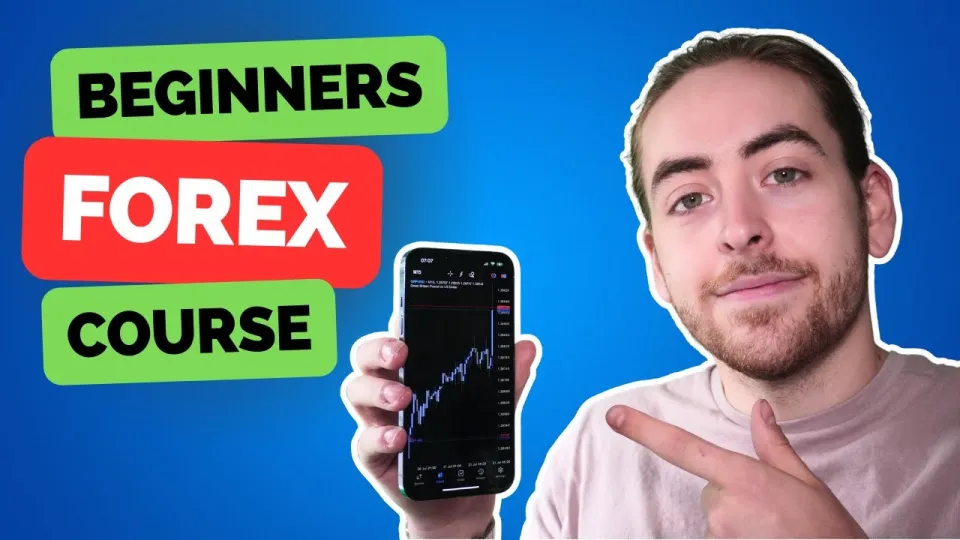
Forex is the over-the-counter market where one currency is exchanged for another, and a trader earns on the change in the exchange rate of a currency pair. For a beginner, this means three things: you need a regulated broker, a tested entry rule and strict risk control. JeaFx's full beginners course covers exactly this path — from the basics of currencies to a trading plan — and the free class at jeafx.com/class is where the author sends new traders for the deeper material.
What forex is and what is actually traded
Forex is the exchange of national currencies at a market price, and everything on the screen is built on currency pairs. The euro against the dollar (EUR/USD), the pound against the dollar (GBP/USD), the dollar against the yen (USD/JPY) and the dollar against the franc (USD/CHF) are the four most liquid instruments, and beginners usually start there.
A currency pair is a ratio: the first currency is the base, the second is the quote. A quote of 1.0850 on EUR/USD means one euro costs 1.0850 dollars. If the rate rises, the base currency strengthens; if it falls, it weakens. There is no separate "euro price" — you always trade one currency against another.
The forex market is decentralised and runs 24 hours a day from Monday to Friday, moving between three sessions:
- Sydney and Tokyo — the Asian session, typically the calmest.
- London — the highest liquidity and the widest ranges in European pairs.
- New York — the overlap with London is where most of the daily volatility happens.
Most retail volume goes through CFDs and rolling spot contracts rather than physical currency delivery, so a private trader never receives banknotes — only the financial result of the rate change.
How money is made in currency trading
Profit in forex comes from the difference between the entry and exit price of a position, multiplied by the position size. Two mechanics make this work: direction and leverage.
Direction: if you expect EUR/USD to rise, you buy (go long); if you expect it to fall, you sell (go short). Short selling is available on any pair without borrowing the asset, which is one reason the currency market attracts so many beginners.
Leverage: a broker lets you control a position larger than your deposit. With 1:100 leverage, $100 of margin controls $10,000 of currency. That cuts both ways — a 1% move against a 1:100 position wipes out the entire margin. This is why experienced traders cap risk per trade at about 1% of the account and track a daily drawdown limit instead of sizing positions by feeling.
Position size is calculated from risk, not from the amount available. The formula is simple: risk in money divided by stop distance in pips gives the lot size. A $500 account risking 1% ($5) with a 25-pip stop allows a position of roughly 0.02 lots on most pairs — small, but survivable across a losing streak.
Spreads and commissions are the cost side of the equation. A 1-pip spread on EUR/USD means the position starts 1 pip in the red, so a scalping strategy that targets 3–5 pips gives away a large share of its edge to the broker.
Choosing a broker and setting up a trading account
A broker is the intermediary that gives a retail trader access to the interbank price, and the choice of broker matters more than the choice of strategy. Four things to check before depositing:
- Regulation — a licence from a recognised authority (FCA, ASIC, CySEC) with segregated client funds.
- Trading costs — spread on the pairs you actually trade, plus commission if the account is raw-spread.
- Execution — order fills during news releases and the presence or absence of requotes.
- Withdrawals — processing time, fees and whether the broker pays out without friction.
Account setup follows a standard sequence: register and verify identity, pick an account type (standard or raw spread), install a platform such as MetaTrader 4, MetaTrader 5 or TradingView, then fund the account. A demo account is the correct first step — it lets you test the platform and your rules without paying the market for the lesson.
A common beginner mistake is opening a live account with $100–$500 and treating it like a casino. That amount is too small to survive normal volatility at retail lot sizes, and the emotional pressure of a tiny balance pushes traders into oversized positions. Either trade demo until the process is automatic, or fund an account big enough that a 1% risk is a meaningful but not painful number.
Building a market edge
A trading edge is a repeatable, testable reason why a setup should produce profit over a large sample of trades. Without one, results are random, and random results cannot be improved.
An edge usually combines three layers:
- Market structure — where price is relative to recent highs, lows and ranges. Trend continuation and range reversals are different games with different rules.
- Entry trigger — a specific price action signal (break of structure, rejection wick, order block) that defines exactly when you enter.
- Context filter — session timing, news calendar and higher-timeframe direction that decide whether the setup is allowed at all.
Backtesting is what turns an idea into an edge. Take 100–200 historical setups, record entry, stop, target and result in a spreadsheet, and look at win rate, average risk-to-reward and maximum losing streak. A strategy with a 40% win rate and a 1:2.5 reward-to-risk ratio is profitable; a strategy with a 70% win rate and a 1:0.5 ratio is not. The backtesting walkthrough linked from the course description is the practical companion to this step.
Risk management sits on top of the edge. The standard framework: maximum 1% per trade, a daily loss limit (often 3%), a weekly limit, and a trading journal that records every setup with a screenshot and the reason for entry. The journal is what separates traders who improve from traders who repeat the same year.
Mindset, expectations and typical beginner questions
Trading psychology is not about staying calm — it is about designing rules that remove decisions from the moment of pressure. A written plan with fixed risk, fixed sessions and a fixed maximum number of trades per day does more for discipline than any motivational advice.
Expectations deserve the same honesty. Forex is not a fast income source: a realistic target for a developing trader is a modest monthly return with controlled drawdown, not doubling an account. Comments under beginner courses show the same pattern again and again — people ask whether they can start with a few hundred dollars, whether they should learn alone or with a group, and how long it takes before results appear. The honest answers: small accounts limit what is possible, a group helps with accountability but not with edge, and the timeline is measured in months of screen time and journaled trades, not weeks.
Another recurring theme is the trader who has been in the market for years and still returns to the basics. That is not a step backwards — most losses trace back to a broken fundamental: oversized risk, no stop, trading during news without a plan, or abandoning a tested strategy after three losses.
Useful links
- Free trading class from JeaFx — the deeper material on why traders lose and how to fix it.
- Mentorship and guided trading — structured work under the author's guidance.
- Instagram: @jeafx_ — short-form setups and updates.
- Free Telegram channel — daily market notes and community.
Final takeaway
Forex for beginners comes down to a short checklist: understand what a currency pair is, learn how leverage multiplies both profit and loss, choose a regulated broker, build and backtest one specific edge, and cap risk at 1% per trade with a journal to prove it. Everything else — indicators, sessions, news — is detail around that core. The full beginners course by JeaFx on YouTube walks through this structure step by step, and the free class at jeafx.com/class is the logical next stop after the video. Start on demo, keep the rules written down, and let the sample of trades — not a single lucky week — tell you whether the approach works.
Key takeaways
- Forex is the exchange of one currency for another, and the profit comes from the change in the exchange rate between the pair.
- The minimum real account in most brokers starts at $100–$500, but professionals recommend risking no more than 1% of the deposit per trade.
- A trading edge is a repeatable pattern (price action, order flow, session timing) confirmed by backtesting, not intuition.
- Most new traders lose money because of leverage abuse, no journal and no daily drawdown limit.
- Broker choice comes down to regulation, spreads, execution speed and withdrawal terms.
Source: Forex Trading For Beginners (FULL COURSE) · Markdown version
Questions & answers
How much money do I need to start trading forex?
Most brokers open live accounts from $100–$500, but a balance that small makes proper 1% risk management almost impossible at normal lot sizes. A practical approach is to trade demo until the process is consistent, then fund an account where a 1% loss is meaningful but not damaging.
Can I learn forex trading on my own?
Yes, but self-study works only with structure: a defined curriculum, backtesting on historical data and a journal of every trade. Learning with a group helps with accountability and questions, yet it does not replace the screen time needed to build and test an edge.
How long does it take to become profitable?
Realistically, months of consistent practice rather than weeks. The timeline depends on how many setups you backtest, how honestly you journal results and whether you keep risk fixed. Traders who skip backtesting usually restart the learning curve after every drawdown.
Why do most beginners lose money in forex?
The usual causes are oversized positions due to leverage, missing stop losses, no daily drawdown limit and abandoning a strategy after a short losing streak. Costs such as spreads also matter: a strategy targeting a few pips gives most of its edge away to the broker.