Claude AI Trading, Building a Crypto Bot and Testing It Live
· based on the channel Edward Morgan
Claude AI trading refers to using Anthropic's Claude AI assistant to design, code, and deploy automated trading bots for cryptocurrency markets. You can build a crypto trading bot with Claude AI by describing your strategy in plain English, letting Claude generate the Python code, and then connecting it to an exchange API for live or paper trading. A full step-by-step guide and bonus resources are available at this link.
What Is a Claude AI Crypto Trading Bot?
A Claude AI crypto trading bot is a software program that uses Claude's language capabilities to generate trading logic and code, which is then executed on a crypto exchange. Claude does not trade directly; instead, it helps you create the bot's architecture, write the necessary functions, and troubleshoot errors. The bot itself runs on your computer or a cloud server, connecting to exchange APIs to fetch market data and place orders. This approach lowers the barrier to entry for algorithmic trading, as you don't need to be an expert programmer to get started. However, the quality of the bot depends on the clarity of your strategy and your understanding of market risks.
How to Build an AI Trading Bot with Claude AI
Building an AI trading bot with Claude AI involves a structured process: define your strategy, generate code, set up API keys, and test. Follow these steps to create your own bot.
- Define your trading strategy: Decide on the indicators and rules. For example, a simple strategy might buy when the 50-period moving average crosses above the 200-period moving average and sell on the opposite cross. Claude can help refine this into precise conditions.
- Choose a crypto exchange and create API keys: Sign up on an exchange like Binance, Coinbase, or Kraken, and generate API keys with trading permissions. Store these keys securely; never share them publicly.
- Generate the bot code with Claude: Provide Claude with a detailed prompt: the exchange, the programming language (Python is common), the indicators, and the risk parameters. Claude will produce a script using libraries like ccxt for exchange connectivity and pandas for data analysis.
- Set up a development environment: Install Python and required packages (ccxt, pandas, numpy). Run the code locally to test connectivity and data fetching.
- Backtest the strategy: Use historical data to evaluate how the strategy would have performed. Claude can help write a backtesting loop, but be aware of overfitting.
- Paper trade first: Connect to a testnet or use small amounts to verify the bot's behavior in real-time without risking significant capital.
- Deploy and monitor: Once satisfied, run the bot on a cloud server (e.g., AWS, Google Cloud) for continuous operation. Set up logging and alerts to monitor performance.
Claude can also assist in adding features like stop-loss, take-profit, and position sizing. Remember that Claude's code may contain errors; always review and test thoroughly.
Live Test and Results
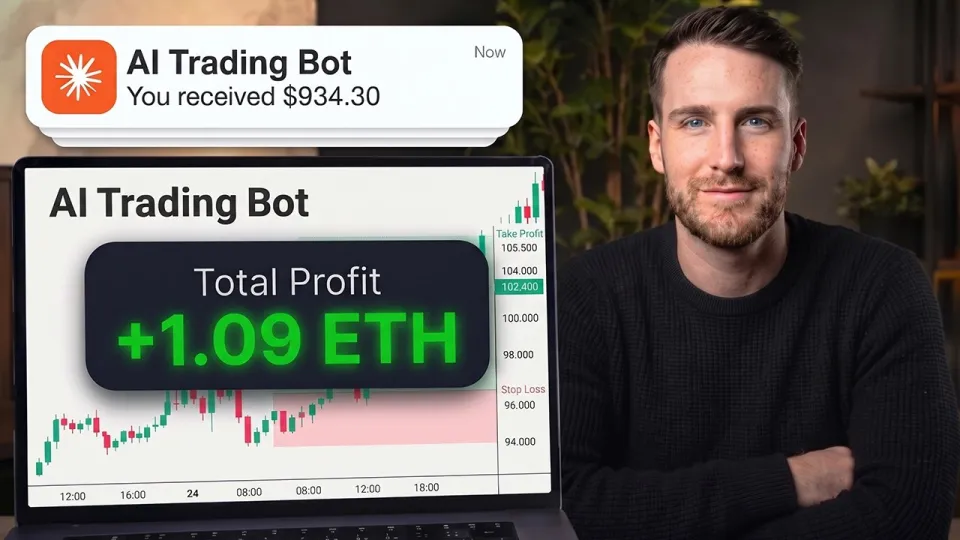
Edward Morgan's live test demonstrates a Claude AI trading bot executing trades on a crypto exchange testnet. The bot, built with Claude's assistance, used a simple moving average crossover strategy on Bitcoin (BTC) pairs. During the test, the bot successfully placed buy and sell orders based on the programmed signals, but results were mixed due to market volatility. The test highlights that while Claude can generate functional code, the bot's profitability is not guaranteed and depends on market conditions and strategy robustness. The live test also revealed the importance of error handling and API rate limits, as the bot encountered occasional connectivity issues.
Key Risks and Limitations of Claude AI Trading
Claude AI trading carries significant risks, including market volatility, code errors, and over-reliance on AI-generated logic. Claude is not a financial advisor and cannot predict market movements; it only assists with code generation. Automated bots can execute trades rapidly and may incur losses if the strategy is flawed. Additionally, API keys must be secured to prevent unauthorized access. Always start with small amounts and never invest more than you can afford to lose. Regulatory changes and exchange policies can also impact bot operations.
Getting Started with AI Crypto Trading
To get started with AI crypto trading, begin with a demo account and a simple strategy, then gradually increase complexity as you gain experience. Use Claude to iterate on your code and learn from errors. Join trading communities and study common pitfalls like overfitting and look-ahead bias. The guide linked at the beginning provides a structured path and additional resources to accelerate your learning.
Conclusion
Building a Claude AI trading bot is an educational project that combines AI-assisted coding with crypto market dynamics. Edward Morgan's video breakdown provides a practical walkthrough, from strategy definition to live testing, emphasizing the need for caution and continuous learning. Remember that no bot guarantees profits, and risk management is paramount. For a comprehensive guide and bonus materials, visit https://tr.ee/7m2goN to start building your own bot today.
Key takeaways
- Claude AI can generate Python code for a crypto trading bot that connects to exchange APIs like Binance or Coinbase.
- A typical bot uses indicators such as RSI and moving averages to generate buy/sell signals.
- Edward Morgan's live test shows the bot executing trades on a testnet, but results vary with market conditions.
- Risk management features like stop-loss and position sizing are essential for automated crypto trading.
- Claude AI is not a predictive model; it assists with code and logic but does not forecast prices.
Source: Claude AI Trading: How to Build an AI Trading Bot (Crypto Trading Bot Live Test) · Markdown version
Questions & answers
Can Claude AI predict crypto prices?
No, Claude AI is not designed to predict market movements. It can help you build trading bots, analyze historical data, and generate code, but it does not have predictive capabilities. Any trading decisions should be based on your own research and risk tolerance.
Do I need programming experience to build a trading bot with Claude?
Basic programming knowledge is helpful but not strictly required. Claude can generate code based on your descriptions, but you'll need to understand the logic to review and modify it. Familiarity with Python and APIs will make the process smoother.
Is it legal to use a crypto trading bot?
Legality depends on your jurisdiction and the exchange's terms of service. Most exchanges allow automated trading via API, but some restrict it. Always check the exchange's rules and local regulations before deploying a bot.
How much money do I need to start AI crypto trading?
You can start with as little as $100 on many exchanges, but it's advisable to begin with a demo account or small amounts to test your bot. Never invest more than you can afford to lose, as crypto trading is highly volatile.